The Lantern Kenji Never Lit
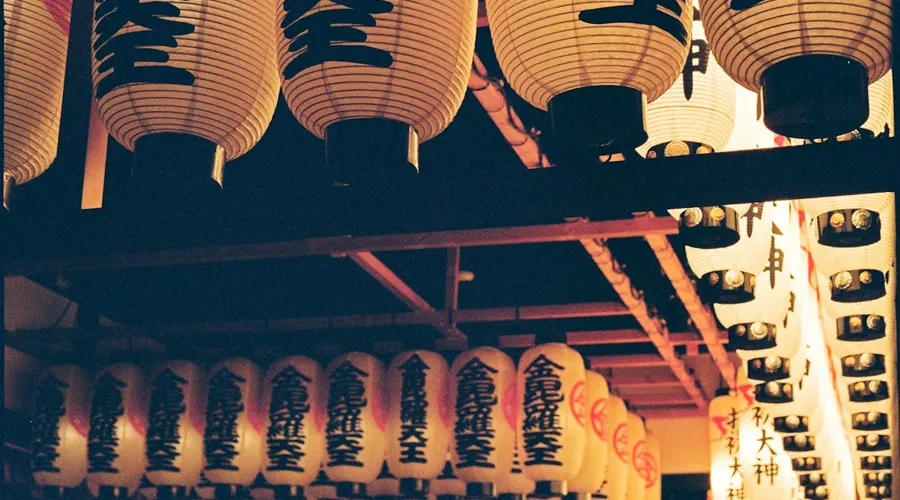
A Bedtime Zen Story
High in a mountain village where the fog rolled in each evening like a slow grey tide, there lived a lantern-maker named Kenji.
Kenji’s hands were steady and his eyes were patient. He had learned his craft from his father, who had learned it from his own father before him, and the paper lanterns of their family were known throughout the valley for their warm, honest light.
But somewhere along the way, Kenji began to want more than honest light. He wanted perfect light.
He imagined a lantern whose flame would never gutter in the wind, never dim as the oil ran low, never throw a trembling shadow on the wall. A lantern that would burn the same steady gold from dusk until dawn, every night, forever.
So Kenji began to hold back.
Each lantern he finished, he studied by candlelight, searching for the flaw that kept it from being the one. The paper was too thin here, the frame too heavy there, the flame too easily stirred by a draft under the door. One by one, he wrapped the lanterns in cloth and set them on shelves in the back room of his shop, unlit, waiting for the day he would finally get it right.
The shelves filled. The shop grew dim. Villagers who came to buy a lantern for a wedding or a new baby left with nothing, because Kenji always said, “Not yet. I am close. Come back when it is finished.”
Years passed this way, and Kenji’s back room came to hold more unlit lanterns than anyone could count, each one dark, each one waiting for a perfection that never arrived.
One autumn evening, the fog came down thicker than usual, swallowing the mountain path in cloud before the sun had even set. A little girl named Emi, who had wandered too far from her grandmother’s house gathering chestnuts, found herself lost on the narrow trail above the village, unable to see her own hands in front of her.
She saw a single window glowing faintly through the mist: Kenji’s shop, the one lantern he kept burning at his workbench so he could see to work.
Emi knocked, shivering, and Kenji let her in. He wrapped her in a blanket and, without thinking, reached for the plainest lantern within reach (one from years ago, with a slightly crooked frame and paper that had yellowed at the edges), lit its wick, and pressed it into her small hands.
“Go home along the ridge path,” he told her. “Hold it steady. It will flicker in the wind, but it will not go out.”
Emi looked up at the shelves behind him, rows and rows of lanterns wrapped in cloth, dark as unopened eyes.
“Why don’t you use one of those?” she asked. “They look so much finer than this one.”
Kenji opened his mouth to explain, and found he had no answer.
He walked with Emi partway down the mountain, watching the small crooked lantern sway in her hands, its flame bending and steadying, bending and steadying, never quite still, and yet never once going dark. By its light, she found her footing on stones he could not see, avoided a root that would have tripped her, and reached the lit windows of the village below.
Kenji stood a long while on the path after she had gone, watching his breath cloud in the cold.
That night he returned to his shop and unwrapped every lantern from its cloth. One by one, he lit them: the crooked ones, the thin-paper ones, the ones with flames that trembled at the slightest draft. He carried them out and hung them along the path up the mountain, so that no one would ever again stand lost in the dark waiting for a light that was still waiting to be born.
The villagers said, afterward, that Kenji’s lanterns had never burned so bright. But it was not the light that had changed.
It was only that, at last, he had let it burn at all.
You do not need the perfect flame to light someone’s way. Even a flickering one, offered now, is enough.
Sleep softly tonight.
Would a gentle voice help?
Let our free Voice Guided Practice walk you through it, breath by breath.
Open Voice Guided Practice