Progressive Muscle Relaxation for Sleep and Anxiety
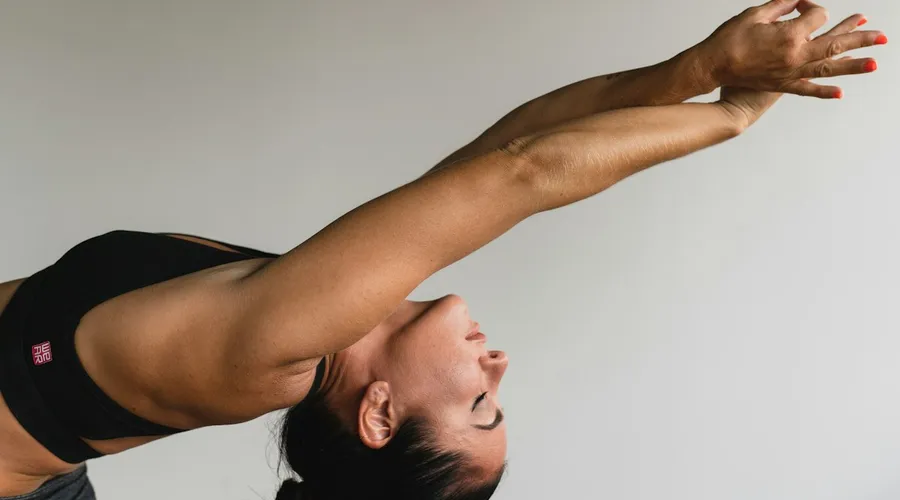
You lie down to sleep and your jaw is clenched. Your shoulders are up near your ears. You did not decide to hold this tension, and telling yourself to relax does nothing, because you cannot feel the difference between tense and loose in the first place. Progressive muscle relaxation, or PMR, fixes that by giving your body an unmistakable before-and-after.
The technique is simple: you tense a muscle group hard for a few seconds, then release it completely and pay attention to what that release feels like. Developed by physician Edmund Jacobson in the 1920s, it is still recommended by clinicians today because it does not ask you to relax on command. It asks you to create a strong contrast, and lets your nervous system draw its own conclusion.
Why Tensing Comes Before Releasing
Anxiety often lives in the body as tight muscles long before it registers as a thought. The trouble is that this tension becomes background noise. It has been there so long you stop noticing it as tension at all; it just feels like your normal resting state. If you cannot perceive the tightness, you cannot let it go.
Tensing a muscle group on purpose, hard, for about five seconds, exaggerates the sensation until it is impossible to miss. When you release it, the drop in tension is sudden and obvious, and that contrast is what teaches your body the actual feeling of loose muscle. This is especially useful if you are the kind of person who “can’t relax” no matter how many times someone tells you to. You are not failing at relaxation. You have likely just never had a clear physical reference point for it, and PMR builds you one, one muscle group at a time.
The Sequence
Find a quiet place to sit or lie down. Move through each muscle group in order, tensing for about five seconds and then releasing for ten to fifteen seconds before moving on. Breathe normally while you hold the tension, then exhale as you let go.
- Feet. Curl your toes downward and tense the arches. Hold, then release, noticing the warmth spreading through your feet.
- Legs. Straighten your legs and squeeze your calves and thighs tight. Hold, then let them go heavy against the floor or mattress.
- Abdomen. Tighten your stomach muscles as if bracing for a light punch. Hold, then release and let your belly soften with your next exhale.
- Hands and arms. Clench your fists, then bend your arms and tense your biceps. Hold, then let your arms drop, feeling the looseness in your fingers.
- Shoulders. Raise your shoulders up toward your ears. Hold, then drop them and notice the space that opens in your neck.
- Face. Scrunch your entire face, eyes shut, eyebrows down, lips pressed. Hold, then release and let your jaw hang slightly open.
After the full sequence, lie still for a minute and scan your body from feet to face. You are likely to find spots that are still holding tension, even after you thought you released everything. That is normal, and worth noticing rather than fixing.
Why It Works So Well Before Sleep
PMR is particularly effective at night because the state you are trying to reach for sleep, physically heavy and still, is exactly what the exercise produces. Instead of lying in bed trying to will your body into stillness, you give it a concrete task to work through, muscle group by muscle group, until stillness is simply what is left over.
It pairs naturally with slow breathing. Once you have moved through the full sequence, shift your attention to your breath and let your exhale lengthen slightly past your inhale. The 4-7-8 breathing technique is a good match here, since both rely on a longer, more deliberate release to signal to your nervous system that it is safe to power down.
Practicing It Regularly
PMR works better with repetition. The National Center for Complementary and Integrative Health lists it among the relaxation techniques with the strongest evidence for reducing anxiety and improving sleep, and like most physical skills, your body gets faster at recognizing the release the more often you practice it. Start with the full six-part sequence a few nights a week. Over time, you may find you can skip straight to noticing tension in a specific area, tense it briefly, and release, without needing to work through your entire body first.
Would a gentle voice help?
Let our free Voice Guided Practice walk you through it, breath by breath.
Open Voice Guided Practice