Mindfulness vs. Meditation: What's Actually the Difference
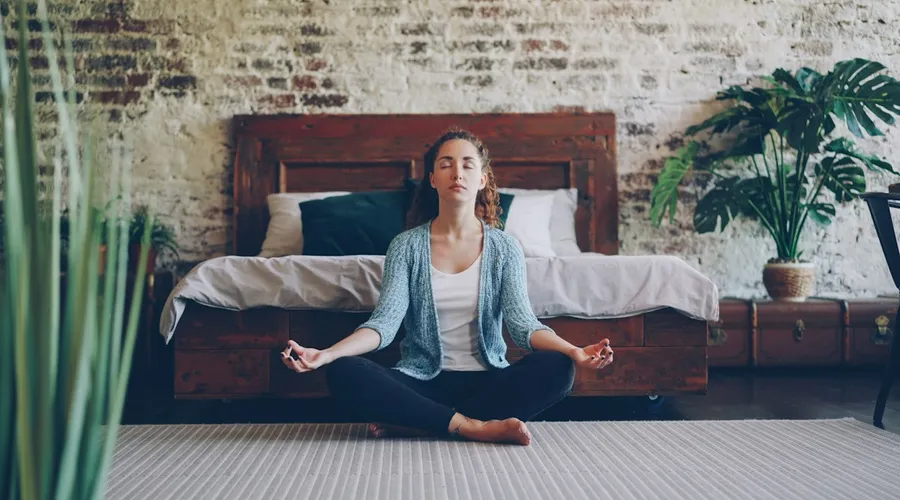
People use “mindfulness” and “meditation” like they’re interchangeable, and most of the time nobody notices the mix-up because the words tend to show up together anyway. But they’re not the same thing, and the difference actually matters if you’ve ever felt like you “failed” at meditation and assumed that meant you weren’t a mindful person.
You can be mindful without ever sitting on a cushion. You can also sit and meditate for twenty minutes and spend the whole time somewhere else entirely. One is a state you can drop into anywhere. The other is a specific method for practicing that state on purpose.
Mindfulness is what you’re doing, not where you’re doing it
Mindfulness is simply the quality of paying full attention to what’s happening right now, without immediately labeling it good or bad and reacting to the label. It’s noticing the actual sensation of hot water on your hands while you wash a dish, instead of running through tomorrow’s meeting in your head while your hands go through the motions on autopilot.
That’s it. There’s no posture requirement, no closed eyes, no incense. Mindfulness is available in a grocery store line, in a hard conversation, in the ten seconds after someone cuts you off in traffic. It’s the difference between reacting to your first thought and noticing that you had a thought at all.
Most of your day, you’re not doing this. You’re running on scripts: driving a familiar route with no memory of the drive, eating lunch while scrolling and not tasting it, nodding along in a conversation while drafting your reply. None of that is a moral failing; it’s just how an efficient brain conserves energy. Mindfulness is the deliberate override of that autopilot, and it can be switched on for two seconds or two hours, in the middle of anything.
Meditation is the training ground, not the goal
Meditation is a formal, dedicated practice: you set aside time, pick an anchor (breath, sound, a body scan, a phrase), and repeatedly bring your attention back to it when it wanders. It’s one specific, structured way of practicing the skill of mindfulness, the same way running drills is one specific way of practicing the skill of general athleticism.
This is why “I can’t meditate because my mind won’t stop” misses the point entirely. The wandering isn’t a sign you’re doing it wrong. Noticing that your mind wandered and returning your attention is the actual exercise. Nobody sits down to lift weights and expects the weight to feel weightless. The friction is the point.
The National Center for Complementary and Integrative Health describes meditation as an umbrella term for a family of practices that train attention and awareness. Mindfulness-based approaches are just one branch of that family, alongside things like mantra repetition or focused visualization. Meditation isn’t mindfulness itself. It’s concentrated repetition of the muscle movement mindfulness needs.
Where mindfulness shows up without a timer running
Because mindfulness doesn’t require a formal session, it’s worth noticing where you’re already halfway there.
Walking is an easy one. Instead of treating a walk as transit between two points, feel your heel strike the ground, notice the actual temperature of the air on your skin, let your eyes land on details you’d normally scan past. Eating works the same way: one bite chewed slowly, actually tasted, tells you more about mindfulness than an article ever will. Listening is maybe the least obvious example: really listening to someone, without composing your response while they’re still talking, is a full mindfulness practice disguised as a conversation.
None of these require you to stop what you’re doing. They just require you to be there for it.
Why the formal practice still earns its place
If mindfulness can happen anywhere, you might wonder why bother with the seated, timer-running version at all. The honest answer is that informal mindfulness is much harder to sustain if you’ve never built the underlying skill deliberately. Trying to stay present during a stressful meeting with no prior practice is like trying to run a 5K because you decided to, with no training behind it. It’s possible, but it’s a lot harder than it needs to be.
Formal meditation gives you a low-stakes place to practice noticing and returning, over and over, without the pressure of a real situation demanding something from you. That repetition is what makes the skill available later, when you actually need it: mid-argument, mid-deadline, mid-3-a.m.-worry spiral.
You don’t need to choose one over the other. Try a short guided session with our meditation timer today, and afterward, carry that same quality of attention into something ordinary: a walk, a meal, a conversation. That’s the whole practice, on and off the cushion both.
Ready to sit?
Try our free, distraction-free Meditation Timer with customizable interval bells.
Open Meditation Timer